Your Closet Called — It Said You Have Nothing to Wear (And It’s Kind of Right)

Your Closet Called — It Said You Have Nothing to Wear (And It’s Kind of Right)
A closet full of clothes and nothing to wear. Sound familiar? You’re not alone. This is one of the most universal wardrobe paradoxes in existence. The average American owns 103 pieces of clothing and wears about 20% of it regularly. That means 80 items are just hanging there. Judging you. Collecting dust. Draining the space that good clothes deserve.

Your closet called. It said you have nothing to wear. And honestly? It’s kind of right.
But here’s the good news: this is a completely solvable problem. It doesn’t require spending more money. It doesn’t require a personal stylist. It requires honesty, a few hours, and a new way of thinking about what you actually own.
Why Your Closet Feels So Overwhelming
Let’s start with the real problem. Most overstuffed closets share the same issue: too many impulse buys, too few intentional pieces. You bought the trendy item because it was on sale. You kept the dress that doesn’t fit right because you paid too much for it. You held onto pieces that used to work but don’t anymore. The closet became a museum of past shopping decisions rather than a functional wardrobe.

The first step is a full audit. Pull everything out. Every single item. Lay it out. Look at it honestly. Try pieces on if you’re not sure. Ask yourself three questions about each item: Does it fit? Do I actually like it? Have I worn it in the last year? If the answer to any of these is no, that item is a candidate for the exit.
Let Go off the Clothes That No Longer Serve You
Be ruthless. This is harder than it sounds. We attach meaning and memory to clothes in ways that go beyond function. The dress you wore to your best friend’s wedding. The jacket you bought on a trip. The sweater that makes you feel like yourself on bad days. Those pieces earn their space. Everything else needs to justify its presence.
Once you’ve cleared the dead weight, look at what’s left. Chances are you’ll notice gaps — and more importantly, you’ll notice patterns. You probably already own most of your actual style. The pieces you kept are the ones that work. They’re your real wardrobe. Everything else was noise.
Identify What’s Missing
Now figure out what’s actually missing. This is a different exercise from shopping out of boredom or impulse. What outfits fall apart because one piece is missing? Do you have great pants but nothing to wear on top? Do you have beautiful tops but no bottoms to pair them with? Do you have almost-complete outfits that need one bridge piece to work?
The gap analysis is where intentional shopping begins. You’re not shopping for things to fill space. You’re solving specific problems. You need a white button-down that actually fits. You need a pair of versatile black trousers. You need a lightweight layer for in-between weather. These are targeted purchases with purpose.
Organize Your Closet Like a Stylist
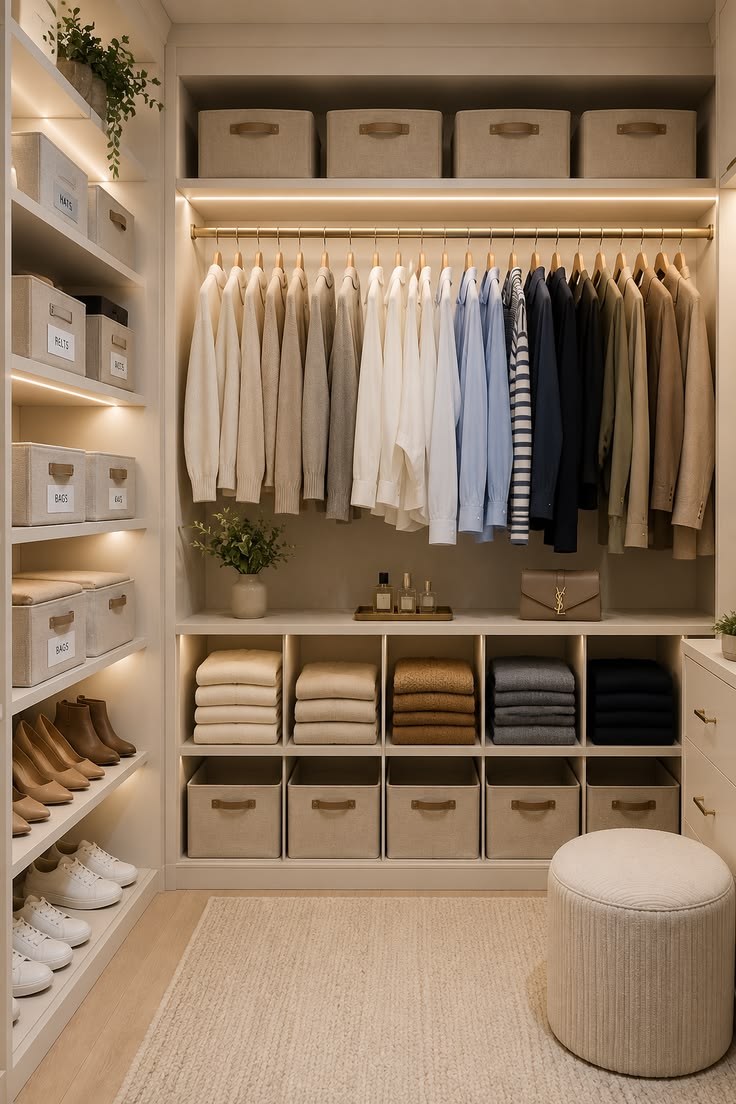
Now organize what you have. This step is underrated. The way your closet is arranged directly affects how often you wear things. Pieces buried at the back of the rack don’t get worn — not because you don’t like them, but because you don’t see them. Organize by category. By color within category. Make everything visible.

Create Ready-to-Wear Outfit Combinations
Create outfit combinations in your head — or take actual photos. This is a technique stylists use and it’s genuinely transformative. When you can see which items work together, you stop experiencing the closet as a pile of separate items and start experiencing it as a wardrobe. That mental shift is the difference between “I have nothing to wear” and “I have fifteen outfits.”
Maintain the system. The most beautifully curated wardrobe in the world will devolve back into chaos without maintenance. Every time you buy something new, something old should leave. The one-in-one-out rule keeps the closet from becoming the museum again.
A Functional Closet Brings Peace of Mind
The real goal isn’t a closet full of clothes. The real goal is a closet full of choices. Every item you keep should be something you’re genuinely excited to wear. Your wardrobe should feel like a resource — not a source of morning anxiety.
Your closet called because it needed help. Answer that call. Give it a few hours of honest attention. Clear out the noise. Focus on what works. And the next time you open those doors in the morning, you might just hear something different: “You have everything you need.”
Organized closets are easy to manage. It gives you peace of mind when you have everything properly stored in it. No clumsy folds and no extra items hanging around.